 RNDRS
RNDRSGuides
AI Rendering for Landscape Architecture: From Planting Plan to Living Image
June 16, 2026
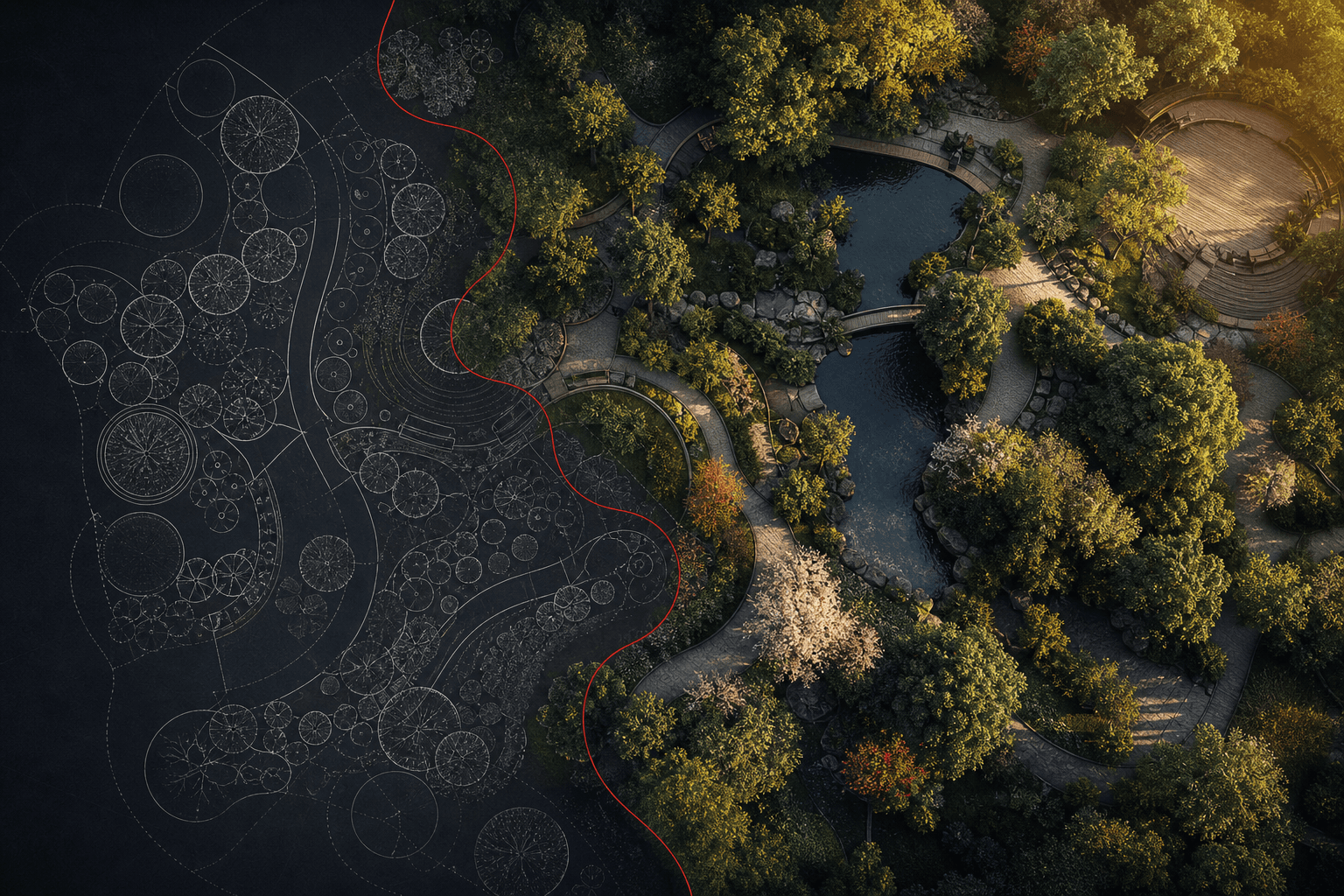
Landscape architecture has the hardest visualization problem in the built environment: the design is alive, it changes by season, it takes a decade to reach its best self — and the drawings that describe it are circles with species codes. AI rendering closes exactly this gap. (See also RNDRS for landscape architects.)
The core workflows
Planting plan → eye-level view
Upload the plan (or better, a loose perspective sketch over it), and prompt the planting character: "Native meadow planting, mature multi-stem birch, gravel path, late summer." The result is the image the public consultation actually responds to — the experience of the space, not the diagram of it.
Site photo → proposed landscape
Photograph the existing site, then render the design onto reality. Pair with the AI eraser to clear bins, cars or failing planting first. Before/after pairs from identical camera positions are the most persuasive format in committee settings.
Season studies
The same scheme rendered in "June bloom" and "February structure" answers the question every client silently asks: what does this look like for the eight months it isn't summer? Two prompts, one canvas, honest answer. Winter renders that still look good win approvals.
Maturity studies
Render the ten-year canopy, not the sapling row. Prompt for "established planting, 10-year growth" — committees approve visions, and saplings don't photograph as vision.
Software pairings
Works from any tool's output: Vectorworks Landmark viewports, SketchUp site models, Rhino terrain — or a hand sketch over the survey. Clear geometry plus a species-character prompt is all the model needs; you don't model a single plant.
Prompting plants without naming every species
The AI responds to planting character better than Latin binomials. Build prompts from:
- Structure: "multi-stem trees", "clipped hedging", "loose perennial drifts"
- Palette: "silver-green and white", "warm autumn rust"
- Habitat feel: "native meadow", "woodland edge", "coastal dune grasses"
- Season + light: "late summer, low evening sun"
Finishing moves
- Extend a tight view into a full panorama for exhibition boards.
- Upscale to 4K for print.
- Animate grasses and light with a slow camera drift — five seconds of movement communicates a landscape better than any still.
The fastest convert in any landscape office is whoever has a consultation next week. Upload the current scheme and render it free — June and February versions both.