 RNDRS
RNDRSGuides
How Architecture Firms Actually Use AI in 2026
June 16, 2026
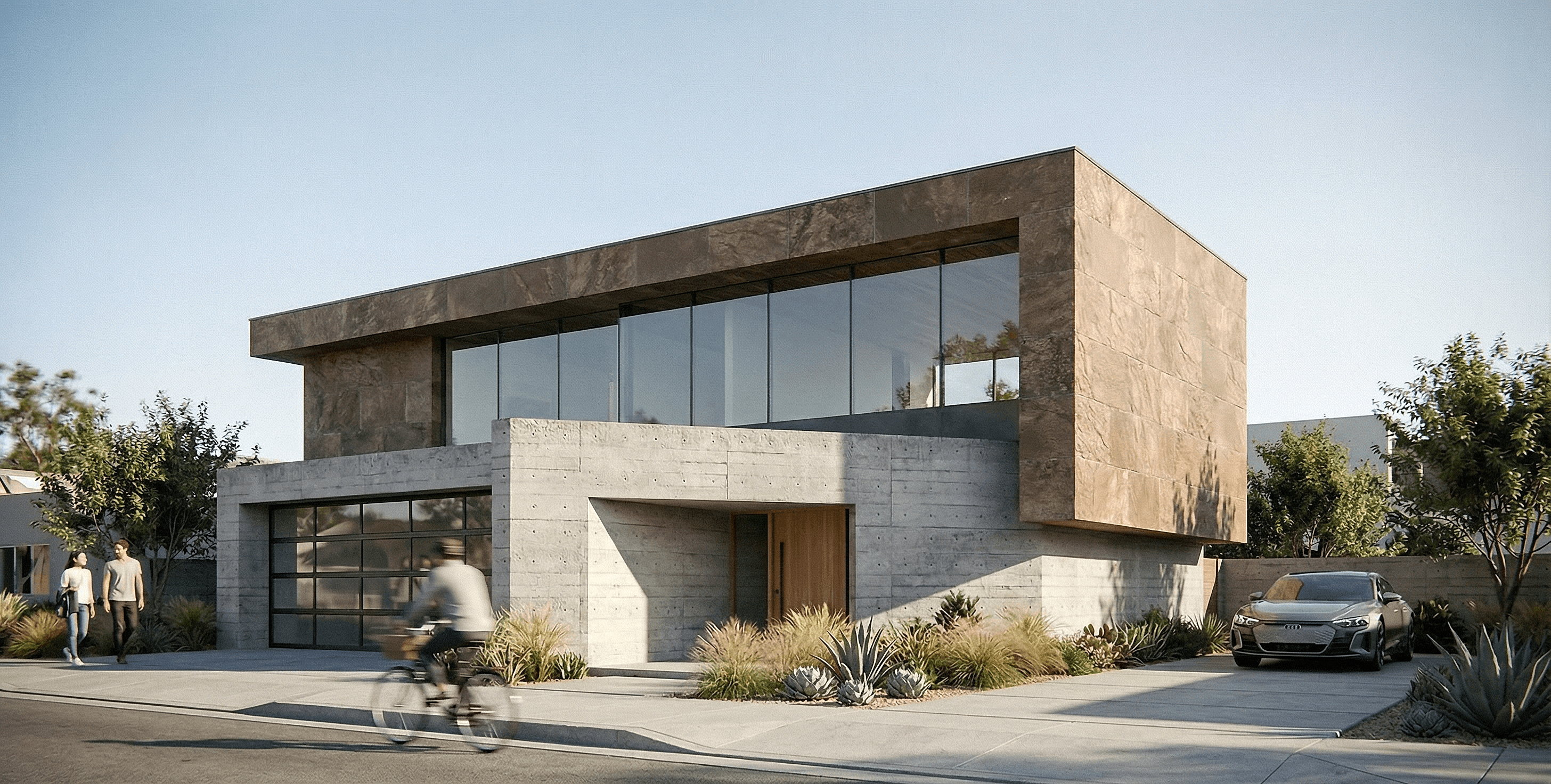
Three years into the AI wave, the pattern across practices is consistent: the tools that stuck are the ones that compress an existing bottleneck without asking the firm to reorganize around them. Here's where AI actually lives in architectural practice in 2026 — and what implementation taught the firms that did it well.
Visualization: the beachhead
Rendering was the first workflow AI conquered, because the bottleneck was so pure: image-making labor between design decisions and design communication. The standard pattern now:
- Concept and option imagery is AI-generated from viewport exports and sketches — clay model in, photoreal out, seconds per image.
- Client meetings run on live iteration: material and massing alternatives rendered during or between sessions, decisions made on photoreal evidence instead of imagination.
- Hero finals still go to simulation or studios — but once per project instead of five times, because AI imagery absorbed the revision rounds upstream.
Firms describe the shift the same way: rendering stopped being a scheduled event and became ambient.
The option-space habit
The deeper change isn't speed — it's that iteration became culturally free. When ten directions cost two minutes, juniors explore honestly instead of pre-committing, and clients choose between seen options instead of approving unseen ones. Practices using node-based canvases (RNDRS) report the canvas itself becoming the meeting artifact: the option tree, visible, wired to its sources.
Beyond rendering
- Site photo workflows: erasing clutter from surveys, rendering proposals onto existing conditions, virtual staging for handover photography.
- Bid and pitch imagery: photoreal concepts at pitch stage, before fee. Firms consistently report this changing close rates — the pitch that shows the building beats the pitch that promises it.
- Document and admin AI (specs, meeting notes, code lookups) — useful, unglamorous, widely adopted, and not the subject of this post.
What implementation actually looks like
The firms that integrated well share four habits:
- They picked architecture-tuned tools. Generic image models redraw buildings; geometry-preserving tools respect them. This single criterion filters the field.
- They standardized prompts. A shared prompt library ("our residential exterior look", "our planning-set style") keeps output consistent across the team — the studio's visual voice, encoded.
- They put it in the pipeline, not beside it. AI rendering bolted onto the old process saves minutes; AI rendering replacing the preview-render stage restructures weeks.
- They kept humans on the finals. Output is reviewed like any junior's work product. The license to use AI is the judgment to edit it.
The honest limitations
Physically exact lighting studies, repeatable image families with zero drift, and litigation-grade accuracy remain simulation territory. Firms that pretend otherwise re-learn it publicly.
The pattern to copy is boring and effective: adopt for visualization first, expand by workflow, measure in hours. The first experiment costs three free renders and an afternoon.